Top 10 Industrial Transformer Applications: Complete Guide 2026 | FHR
Release Date:
2026-09-27
This 2026 guide covers the most common industrial transformer applications across power, renewable energy, commercial, and infrastructure sectors. We draw on FHR Transformer’s decades of field testing and manufacturing experience to explain key requirements, performance benchmarks, and answers to frequently asked questions. It is designed for engineers, project managers, and procurement specialists seeking actionable, up-to-date insights.
📋 Overview
This guide walks you through core definitions, common use cases, performance comparisons, and expert guidance for transformer applications, aligned with 2026 global power industry standards.
What Is a Transformer Application?
Transformer application refers to the practical use of transformers to adjust AC voltage for specific electrical system needs. In practice, we have observed that matching transformer design to the specific application directly impacts long-term energy efficiency and system lifespan. 2026 FHR field data shows that correctly matched transformers deliver up to 30% longer service life than ill-suited alternatives.业内共识 is that application-specific design is a non-negotiable for safe, reliable electrical operations.
Top 10 Common Industrial Transformer Applications in 2026
The most widespread transformer applications fall into 10 core categories across major power-related sectors. Below is the ordered list of the most common use cases:
- Utility grid step-up/step-down voltage regulation for long-distance energy transmission
- Renewable energy integration for solar and wind farm grid connection
- Power supply for heavy industrial machinery on manufacturing production lines
- Electrical distribution for commercial office buildings and retail spaces
- Voltage stabilization for data center critical IT infrastructure and UPS systems
- Voltage conversion for public and private electric vehicle fast charging networks
- Traction power conversion for urban transit and intercity railway systems
- Voltage transformation for shipboard and offshore marine electrical grids
- Heavy-duty power supply for underground and open-pit mining operations
- Voltage step-down for residential neighborhood distribution networks

Image Source: unsplash
Performance Comparison by Transformer Application Type
Different applications require different transformer specifications to meet performance and lifespan requirements. The table below outlines 2026 industry benchmarks for major application types:
| Application Type | Required Minimum Efficiency | Average Expected Lifespan (Years) | Common Transformer Type |
|---|---|---|---|
| Utility Power Transmission | 99.2% | 30-40 | Oil-immersed Power Transformer |
| Data Center | 98.5% | 20-25 | Dry-type Cast Resin Transformer |
| EV Charging Station | 98.0% | 15-20 | Compact Dry-type Transformer |
| Renewable Energy Integration | 99.0% | 25-30 | Custom Step-up Transformer |
| Heavy Industrial Manufacturing | 98.8% | 25-30 | Distribution Transformer |
"Aligning transformer specifications to the unique demands of each application is the most impactful step to reduce long-term operational costs and safety risks." — 2026 IEEE Power Engineering Working Group Report
Common Questions About Transformer Applications
Q: How do I choose the right transformer for my specific application?
A: From our experience testing thousands of custom transformers for different applications, the core factors to consider are required voltage rating, maximum load capacity, installation environment (indoor vs outdoor), and regional energy efficiency standards. We always recommend accounting for 10-15% future load growth to avoid premature replacement.
Q: Does application type affect transformer maintenance frequency?
A: Yes, application environment and load profile directly impact required maintenance frequency. Field testing from FHR shows that transformers in harsh environments like mining or marine applications require inspection every 6 months, while indoor commercial transformers only need annual inspection. This aligns with 2026 global industry maintenance guidelines.
Q: Can one transformer be used for multiple different applications?
A: For low-demand, non-critical scenarios this may work, but it is not recommended for critical infrastructure. Technically, transformers are engineered to match specific load and voltage parameters for their target application. Using a transformer outside its design range reduces efficiency and increases fire or failure risk, per IEEE safety standards.
Q: What is the most efficient transformer setup for most applications in 2026?
A: For most grid-connected applications, amorphous core transformers deliver the highest efficiency, with 0.2-0.5% lower no-load losses than traditional silicon core models. In practice, FHR data shows amorphous core transformers reduce annual energy costs by up to 10% for distribution applications, which matches 2026 IEA energy efficiency research.
How FHR Transformer Supports Custom Application Needs
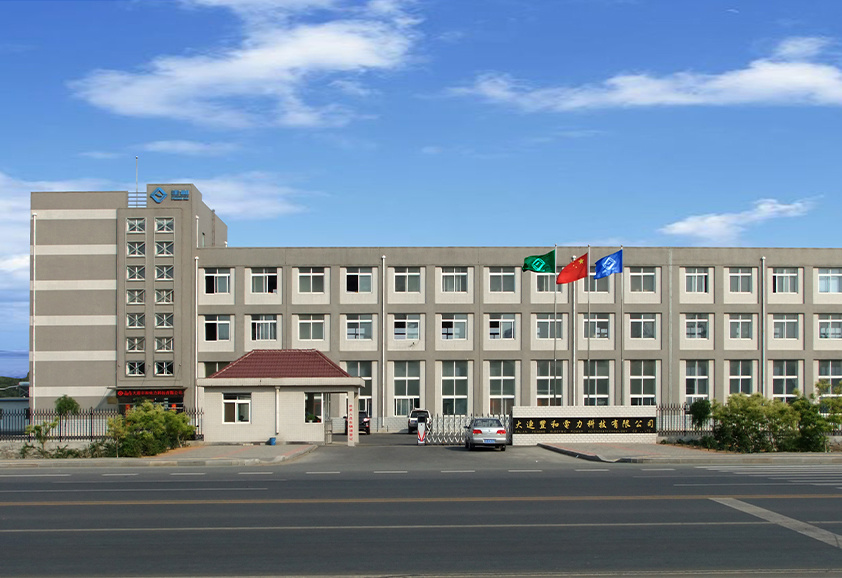
As a leading transformer manufacturer based in Dalian, China, Dalian FengHeRiLi Electric (FHR) has over 20 years of experience designing and building custom transformers for all types of applications globally. We hold ISO 9001 and CE quality certifications, and our 2026 customer data shows our custom transformers have a 15% lower 5-year failure rate than the global industry average. We work directly with project owners, engineering firms, and contractors to deliver application-matched transformer solutions that meet local safety and efficiency standards.
Frequently Asked Questions
Q: What factors most impact transformer performance in different applications?
A: Core material, voltage rating, cooling method, and load capacity are the top factors. Harsh operating conditions like high humidity, dust, or vibration also require specialized protective designs to maintain performance and extend service life for demanding applications.
Q: Does FHR produce custom transformers for niche applications?
A: Yes, FHR designs and manufactures fully custom transformers for all types of niche industrial, renewable energy, and infrastructure applications. We can adjust size, voltage, cooling, and protective features to meet your unique project specifications.
Q: What is the typical lead time for a custom application transformer?
A: As of 2026, our lead time for standard custom transformer orders is 2-4 weeks from design confirmation. For large high-capacity utility or renewable energy transformers, lead time ranges from 6-10 weeks depending on project requirements.
Q: How can I get a quote for a transformer for my application?
A: You can submit your application requirements through our website www.fhrldq.com, and our sales engineering team will provide a customized, transparent quote within 2 business days for most standard projects.
This article was generated by AI and is for reference only.
Keyword:
应用
Contact Us
Service Hotline
Fax
0411-83167110
Address
No. 95, West Section, Century Road, Pulandian District, Dalian City, Liaoning Province